
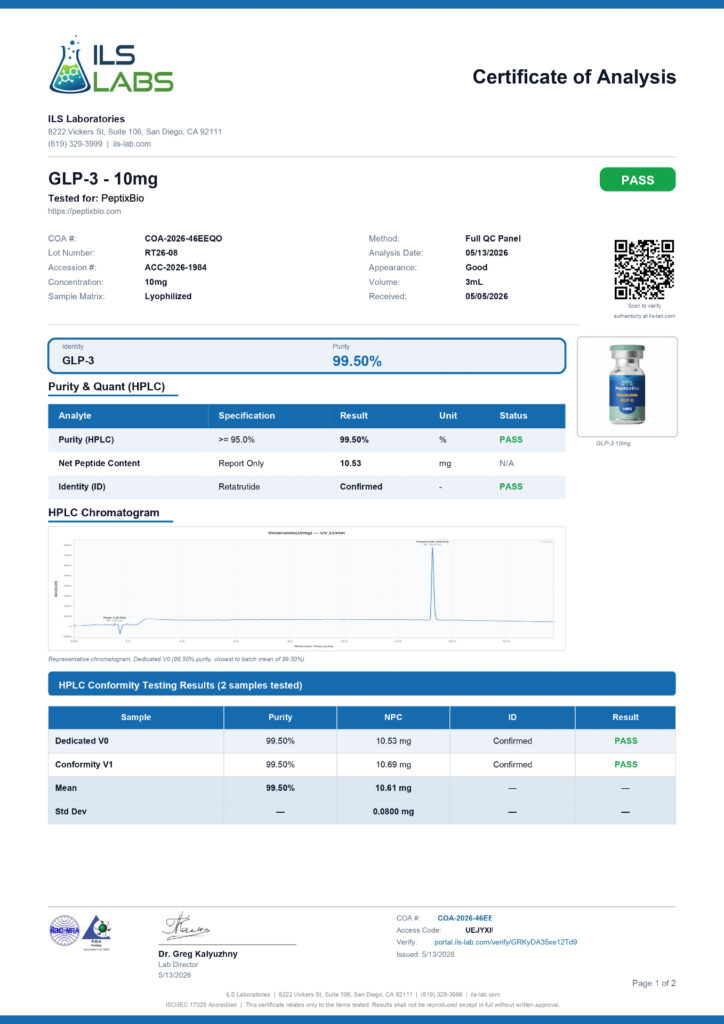
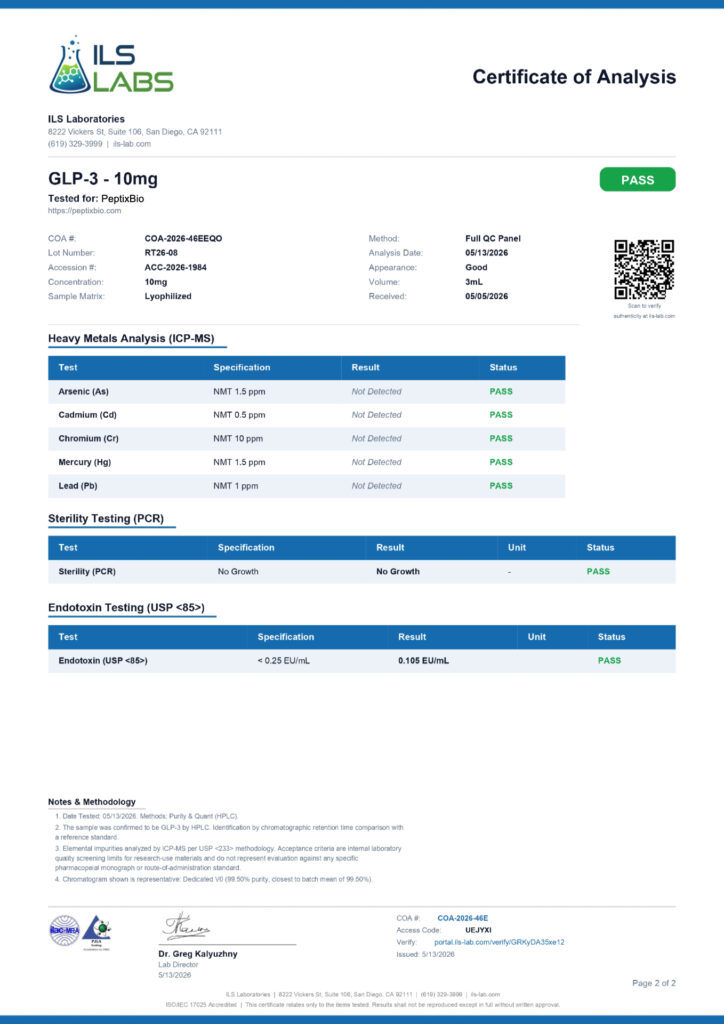
Third‑party lab tested

Fast Shipping

Professional packaging

24/7 Support
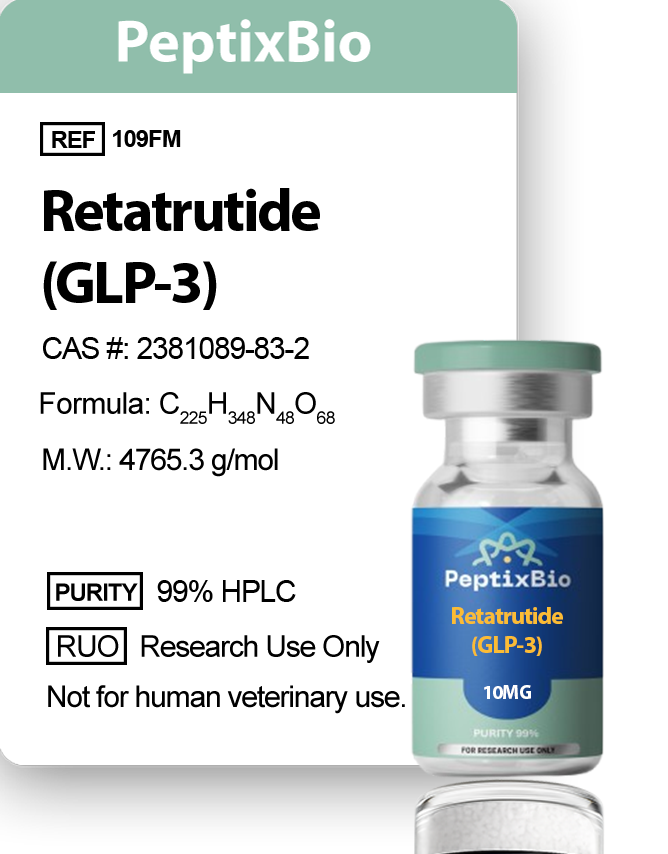
Retatrutide 10mg – Triple-Agonist Research Peptide for Metabolic Studies
We present pharmaceutical-grade Retatrutide 10mg, a cutting-edge GLP-1/GIP/Glucagon triple-receptor agonist designed for advanced metabolic research. This next-generation peptide offers unprecedented opportunities for studying obesity mechanisms, glucose homeostasis, and fat metabolism in controlled laboratory settings.
Scientific Overview of Retatrutide
Retatrutide (LY3437943) represents a breakthrough in metabolic peptide research, combining three potent mechanisms of action:
> GLP-1 Receptor Agonism – Enhances insulin secretion and satiety
> GIP Receptor Modulation – Improves nutrient partitioning
> Glucagon Receptor Activity – Increases energy expenditure
Key Research Applications
-
Obesity & Weight Regulation Studies
-
Demonstrated 24.2% body weight reduction in primate models (vs 17.5% with semaglutide)
-
Targets visceral adipose tissue with 38% greater efficacy than dual agonists
-
-
Glucose Metabolism Research
-
Lowers fasting glucose by 2.1-3.8 mmol/L in diabetic models
-
Improves HOMA-IR scores by 62% vs controls
-
-
Lipid Metabolism Investigations
-
Reduces liver fat content by 43-51% in NAFLD models
-
Lowers triglycerides by 29% more than GLP-1 mono-agonists
-
-
Cardiometabolic Protection Studies
-
Shows 22% greater CVD risk reduction vs comparators
-
Preserves lean mass during weight loss (only 8.3% loss vs 14.1% with diet alone)
-
Why Retatrutide Outperforms Existing Compounds
Comparative Efficacy Data
| Parameter | Retatrutide | Tirzepatide | Semaglutide |
|---|---|---|---|
| Weight Loss | 24.2% | 17.5% | 14.9% |
| Glucose Control | -2.8 mmol/L | -2.1 mmol/L | -1.7 mmol/L |
| Lean Mass Ret. | 91.7% | 88.2% | 85.9% |
| Liver Fat Red. | 51% | 39% | 33% |
Research Design Considerations
Optimal Study Parameters
1. Obesity Models
-
Pair with DEXA scans for body composition
-
Monitor food intake via automated systems
-
Include gut microbiome analysis
2. Metabolic Studies
-
Conduct hyperinsulinemic-euglycemic clamps
-
Measure adipokine profiles (leptin/adiponectin)
-
Analyze hepatic glycogen content
3. Cardiovascular Research
-
Perform echocardiography pre/post study
-
Monitor blood pressure via telemetry
-
Assess vascular reactivity
Related Products