





Description
Product Overview
Retatrutide (LY-3437943) is a novel triple-agonist peptide that targets three key metabolic receptors: GLP-1 (glucagon-like peptide-1), GIP (glucose-dependent insulinotropic polypeptide), and glucagon receptors simultaneously. Developed originally by Eli Lilly, Retatrotide represents a new class of multi-receptor agonist compounds that have generated significant interest in metabolic research.
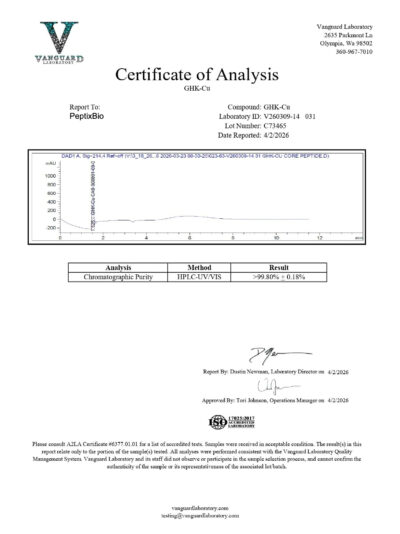
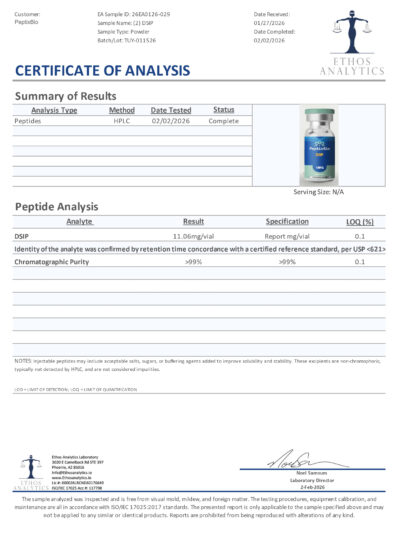
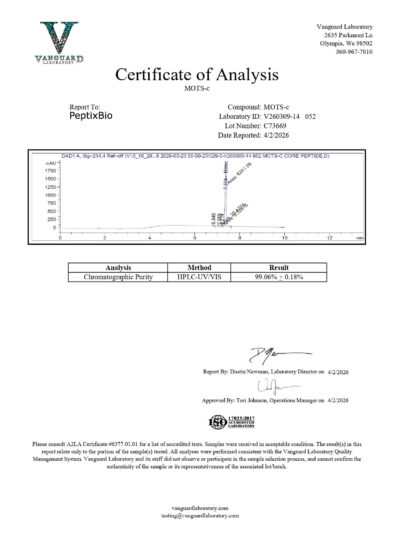
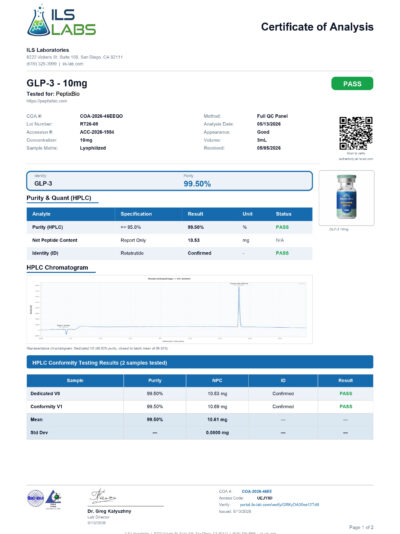
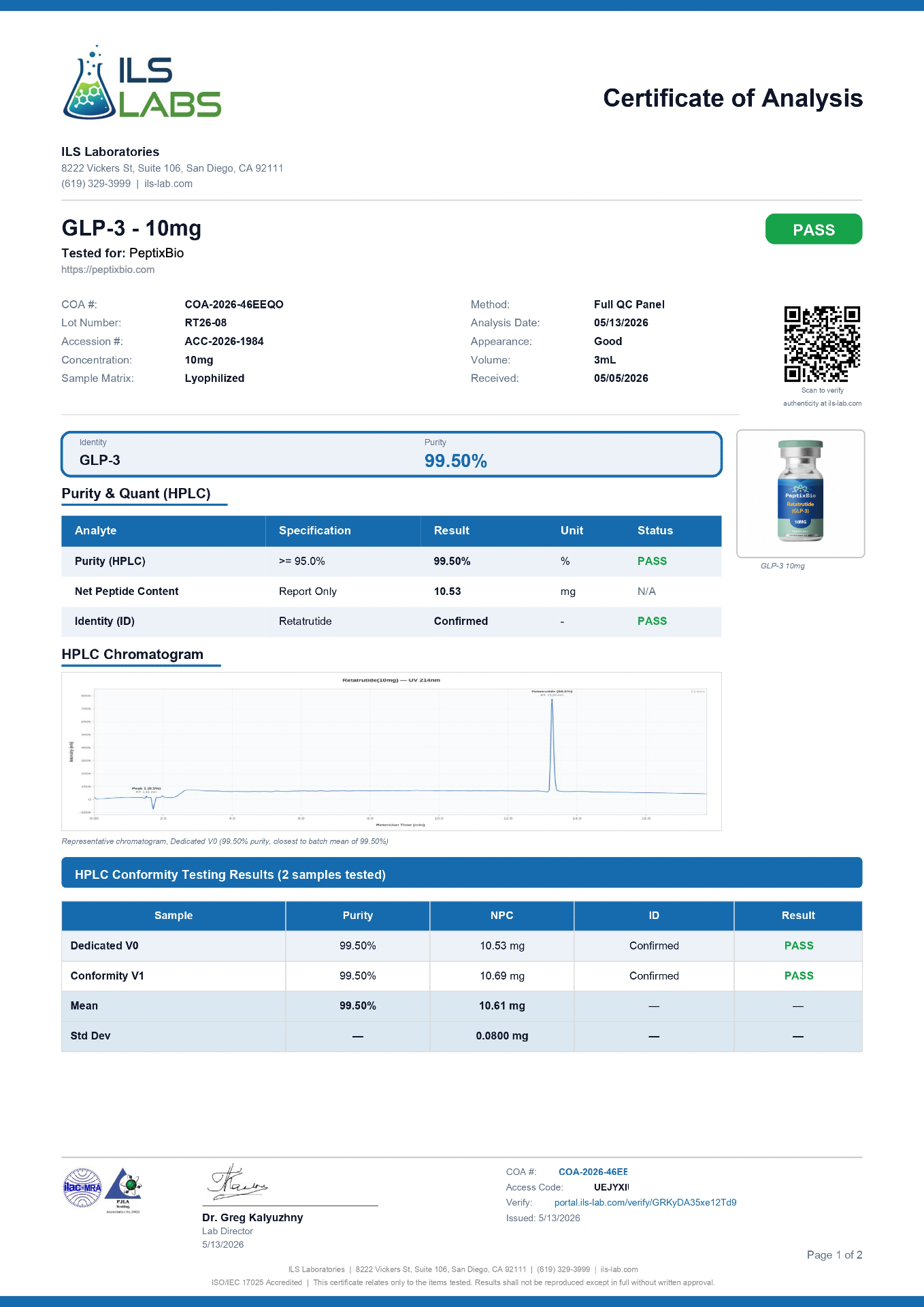
PeptixBio provides retatrutide in lyophilized form at research-grade purity for investigational use only. Each vial is independently tested via HPLC and mass spectrometry, with a Certificate of Analysis included documenting purity, identity, and batch-specific quality data.
Research Background
Retatrotide has been studied in multiple Phase 2 clinical trials for metabolic research, with published results demonstrating significant activity across its three target receptors. The triple-agonist mechanism distinguishes it from dual-agonist compounds like tirzepatide (GLP-1/GIP) by adding glucagan receptor activity, which researchers hypothesize may contribute to increased energy expenditure and lipid metabolism modulation.
Preclinical and clinical research has examined retatrotide’s effects on glycemic control, body composition, hepatic lipid content, and metabolic biomarkers. Phase 2 trial data published in the New England Journal of Medicine generated substantial interest in the research community for its reported efficacy in metabolic endpoints.
The GLP-1 receptor agonist component has been studied for its role in glucose homeostasis and appetite signaling. The GIP receptor component is associated with incretin-mediated insulin secretion and fat metabolism. The glucagan component adds a thermogenic and lipolytic research dimension that single- and dual-agonist peptides do not address.
Researchers studying metabolic pathways, receptor pharmacology, and multi-target peptide engineering have found Retatrotide to be a valuable investigational tool for understanding how simultaneous receptor activation produces synergistic metabolic effects.
Product Specifications
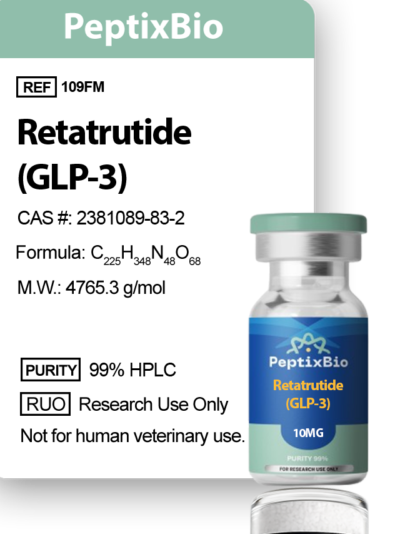
- Purity: ≥98% (HPLC verified)
- Form: Lyophilized powder
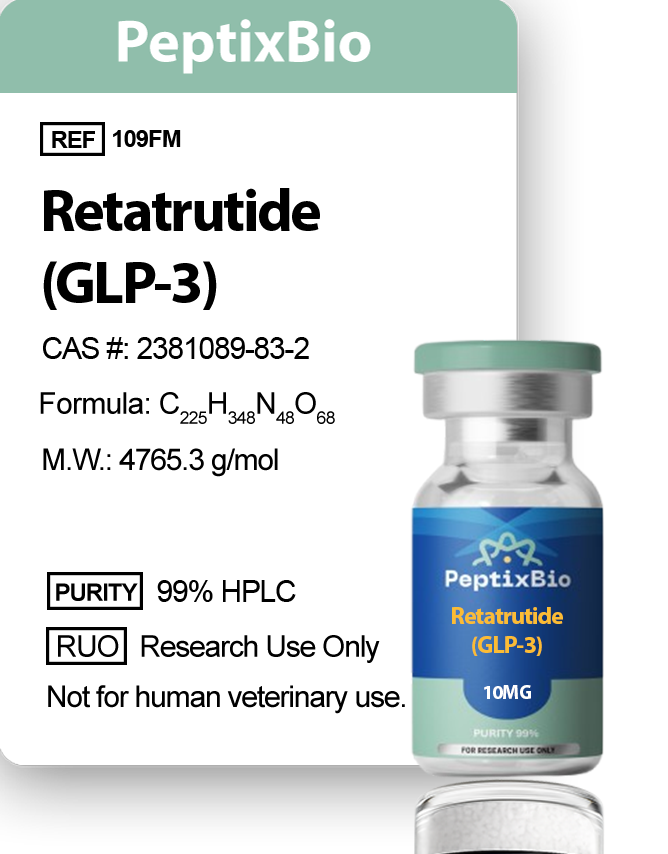
- Quantity: 10mg per vial
- Appearance: White to off-white powder
- Storage: Store at -20°C for long-term, 2-8°C after reconstitution
- CAS Number: 2381089-83-2
Quality Assurance
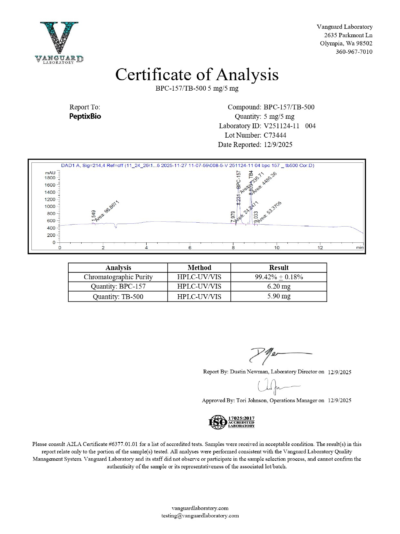
Every batch of Retatrotide from PeptixBio undergoes comprehensive quality control testing, including HPLC purity analysis, mass spectrometry identification, endotoxin screening, and visual inspection. Our supply chain maintains strict cold-chain protocols from manufacturing through delivery to ensure compound integrity. All quality documentation is available upon request, and COAs ship with every order.
Reconstitution and Handling
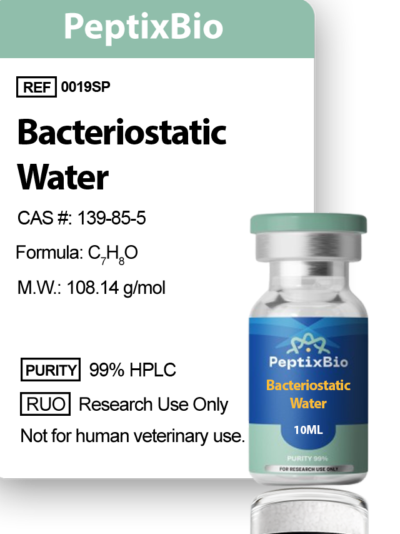
Reconstitute retatrotide with bacteriostatic water using aseptic technique. Add solvent slowly along the vial wall and allow the peptide to dissolve naturally without vigorous agitation. Once reconstituted, store at 2-8°C and use within 21 days for optimal stability. The lyophilized powder should remain at -20°C until preparation. Avoid exposure to direct sunlight and repeated freeze-thaw cycles.
Compliance and Disclaimers
- For Research Use Only (RUO)
- Not for human consumption
- Not intended to diagnose, treat, cure, or prevent any disease
- Not approved for medical, cosmetic, food, or veterinary use
- The buyer assumes all responsibility for proper handling, storage, and use
- Must comply with all applicable local, state, and federal regulations
By purchasing this product, the buyer acknowledges it is being sold solely for research purposes and accepts all associated responsibility.
Related Research on Retatrotide
Researchers often pair Retatrotide with complementary compounds in the PeptixBio catalog. Explore the full lab report library for third-party COAs on every lot, or browse the complete catalog for related research peptides. Independent peer-reviewed background information is available through the PubMed research database.
Quality Standards Behind Every Retatrotide Lot
Every lot leaving the PeptixBio facility passes independent third-party HPLC testing. The Certificate of Analysis is matched to the batch number printed on each vial. Researchers can verify the COA before opening the package, then again at the bench. This level of transparency separates research-grade supply from grey-market sources.
Storage matters as much as sourcing. Each vial ships in lyophilized form with a desiccant pack and should be stored at -20°C until reconstituted. After reconstitution, refrigerate at 2-8°C. Following these conditions preserves potency throughout the research timeline. Cold-chain handling guidance ships with every order.